
As gas prices climb, experts warn of ripple effects from Iran war
 VENN
VENN
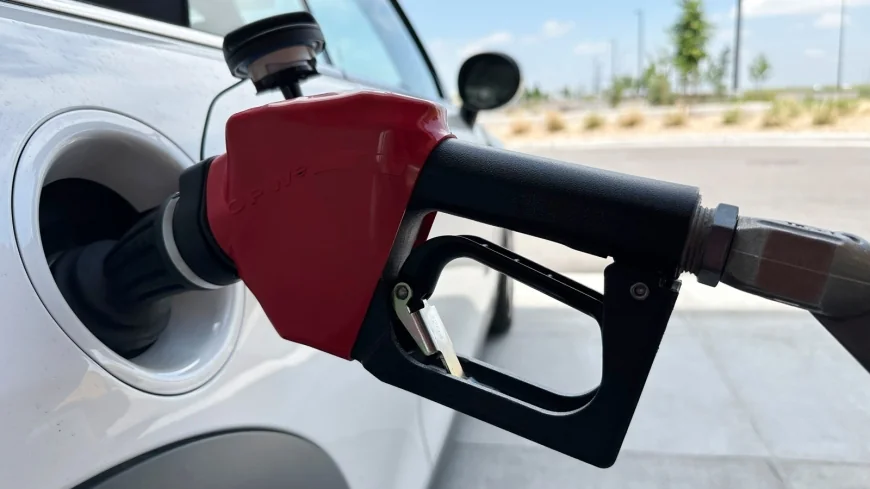
RICHMOND, Va. (WRIC) -- As the war in the Middle East intensifies, the impact on consumers’ wallets could become more pronounced. Experts say the ongoing conflict involving the United States, Israel and Iran has the potential to create ripple effects across the broader economy, particularly if the war drags on.
It has been nearly three weeks since the U.S. and Israel launched attacks on Iran. In response, Iran has carried out missile strikes and moved to block the Strait of Hormuz, a critical global oil transit route. The disruption has contributed to a spike in gas prices nationwide.
In Virginia, the average price for a gallon of regular gas climbed to $3.69, up 88 cents compared to last month, according to AAA.
“Those effects start to ripple from person to person across the whole economy, and we experience a lot of them just in that price of gas at the pump,” said Dr. Stephen Day with the Virginia Council on Economic Education. “But there’s also companies that rely on oil or gas for other reasons.”
Day said the economic consequences extend far beyond fuel costs, often beginning in specific sectors before spreading more widely.
“When there’s a shock to the economy, it starts in a really narrow place. In this case, probably natural gas, for example, and then also nitrogen fertilizer,” Day said. “When those things become more scarce, the people that use those are affected. That becomes more difficult for them to pay for it.”
Tensions in the Middle East have also disrupted the global supply of fertilizer, along with the production of plastics and resins used in food packaging. Economists say those combined pressures may soon extend to grocery bills, and drive up prices for perishable goods.
“You’ll see the price of many food items go up. It will be harder to go to the grocery store. We see enough of that already,” Day said.
Despite the uncertainty, Day said it's important to maintain a personal financial plan even in the event of a crisis.
“People’s long-term financial strategies should still be to live inside your means and expect that there’s going to be crises from time to time,” he said. “You have to save money for that.”
Some experts say the most noticeable impact on grocery prices could emerge about three weeks after the conflict began, suggesting consumers may begin to see changes in the coming days.