
Attorney General Jay Jones joins $17.85 million settlement with pharmaceutical companies
 VENN
VENN
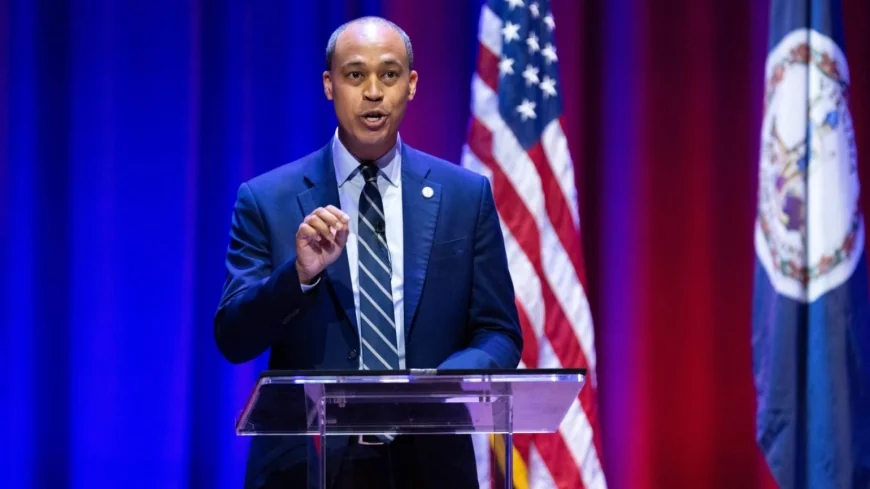
RICHMOND, Va. (WRIC) -- Attorney General Jay Jones announced that Virginia has joined other states in multiple legal settlements against pharmaceutical companies, totaling $17.85 million, to hold them accountable for allegedly conspiring to manipulate the prices of generic prescription drugs.
On Feb. 2, Jones shared in a press release that Virginia, along with 48 other states and territories, announced two settlements with Lannett Company, Inc. (“Lannett”) and Bausch Health US, LLC and Bausch Health Americas, Inc. (“Bausch”), which totaled to $17.85 million.
According to Jones' office, the settlement is the result of allegations that both companies engaged in a conspiracies that they would artificially inflate and manipulate prices, lower competition and reduce trade to multiple generic prescription drugs.
Additionally, in the settlement agreements, Lannett and Bausch have agreed to full cooperation for an additional ongoing multi-state litigation that is being led by Connecticut against 30 corporate defendants and 25 executives. Both companies have also agreed to internally reform for fair competition and to comply with any antitrust laws.
The settlements for Lannett and Bausch follow settlements with Apotex and Heritage, which had a total of $49.1 million.
These settlements have come as states prepare for the first trial connected to three antitrust complaints that are pending in the U.S. District Court for the District of Connecticut. They are projected to be scheduled in late 2026.
If you had purchased a generic prescription drug that was manufactured by Lannett or Bausch from May 2009 to December 2019, you may be entitled to compensation. To find out, call 1-866-290-018, email info@AGGenericDrugs.com or visit the Attorney General's settlement website here.
Forty-two states and territories filed a lawsuit against Novartis and its former subsidiaries, Sandoz Group AG and Sandoz AG, on the basis that they allegedly conspired with other generic manufacturers to fix prices, allocate markets and rig the bids of 31 various generic drugs, according to the release.
The complaint also claims that Novartis allegedly transferred and drained assets from Sandoz, Inc., which is a defendant in the three-state antitrust agencies that were previously filed. Novartis was to shield itself from liability, so it spun off Sandoz Inc.
“Rising costs are hitting Virginians hard in every corner of the Commonwealth, and families are having to make difficult choices between taking their life-saving medications, buying groceries and paying their rent. All the while, unscrupulous pharmaceutical companies are scheming in what is an egregious display of greed,” Jones said. “Virginia will hold bad actors accountable when they hurt our families and our communities. My office will continue to use every legal tool available to us to protect Virginians and keep costs low.”
Connecticut's Attorney General's office has led a coalition of almost every state and territory in three antitrust cases, where the first one started in 2016. The complaint included Heritage and 17 additional corporate defendants, two individual defendants and 15 generic drugs.
The second complaint filed was against Teva Pharmaceuticals and 19 of the largest drug manufacturers in the U.S. in 2019. This complaint also included 16 senior executive defendants.
The third complaint, which is to be tried first, has focused on 80 topical generic drugs that have accounted for billions of dollars in sales within the U.S. It names 26 corporate defendants and 10 individual defendants, according to the release.
There have been an additional seven pharmaceutical executives who have entered settlement agreements with the states and have been working to support the state's claims in all three of the cases.
These cases have all come from multiple investigations based on evidence from witnesses at the center of the conspiracies, a database of more than 20 million documents and phone record databases that contain the details of information for over 600 sales and individual pricing in the generics industry.
The complaint addresses various drugs and defendants and shows the connection between industry executives who met with each other during "industry dinners, 'girls nights out', lunches, cocktail parties, golf outings and communicated via frequent telephone calls, emails and text messages that sowed the seeds for their illegal agreements," per the release.
Additionally, in the complaints, defendants had used terms such as "'fair share,' 'playing nice in the sandbox' and 'responsible competitor' to describe how they unlawfully discouraged competition, raised prices and enforced an ingrained culture of collusion."
Also located within the records that were obtained by the states was a two-volume notebook with concurrent notes of one of the state's cooperatives that established what he discussed during phone calls with competitors and internal company meetings that spanned over a couple of years.