
Spring break approaching, what travelers need to know amidst rising measles cases in Virginia
 VENN
VENN
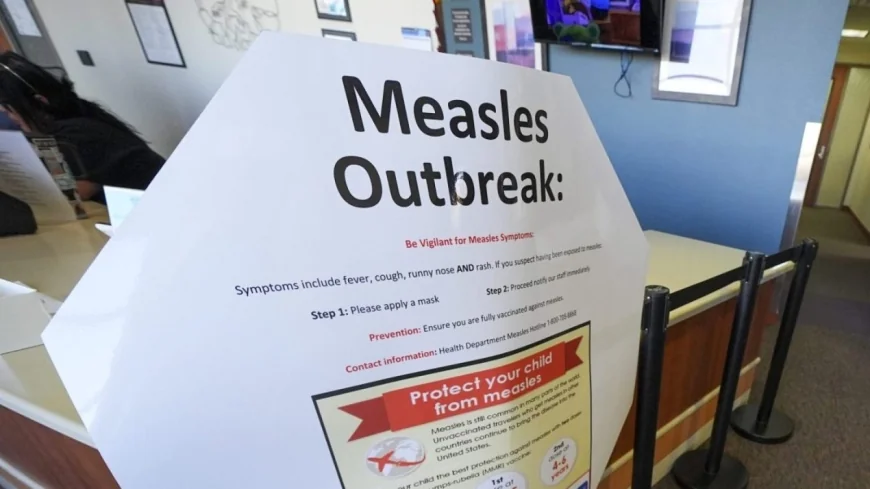
RICHMOND, Va. (WRIC) -- Spring break is approaching for students across the commonwealth, and while Virginia Department of Health (VDH) specialists say they don't advise against traveling, they do say that any period of heightened travel can lead to heightened risks of measles cases.
For many schools in Virginia, spring break comes towards the end of March and can include families traveling both internationally and domestically. However, so far this year, Virginia has seen a total of 10 cases of measles which, according to Vaccine Preventable Disease Coordinator Meredith Robinson with the VDH, is up from the one to two cases Virginia sees annually.
"Virginia typically sees one to two cases of measles a year, and that is normally when an individual is exposed to measles outside of the United States and returns home and becomes sick after they get back," Robinson said.
The recent rise in cases, according to Robinson, is due to heightened travel.
"So I think just any part of the year where there's heightened travel, there's going to be a potential risk for more measles cases," Robinson said.
A majority of the cases, according to the VDH, are between young people, under the age of 4.
"Most of our cases are between our infants -- between individuals who are less than 12 months -- or four years of age," Robinson said.
She also added that the group is more at risk for measles compared to the rest of the population because they are still getting vaccinated.
In January of this year, President Donald Trump withdrew the U.S. from the World Health Organization (WHO).
When asked if this possibly played a role in the rise in cases, Robinson told 8News that, while she says the withdraw hasn't played a major role in activity in Virginia right now, that WHO data is important to CDC and state data.
"I can say is that data from the World Health Organization is very important to keeping the CDC and, subsequently, other states across the U.S. aware of measles activity in other countries," Robinson said. "And that level of awareness is really valuable when we are investigating a potential case."
Robinson further explained that "one of the most important details when investigating a potential measles case is travel history. And so if we aren't aware of where outbreaks are happening across the world, it can limit our our ability to respond quickly."
According to the VDH, measles symptoms can occur seven to 14 days after exposure but can also appear up to 21 days after exposure. They are as follows:
- High fever
- Rash that starts on the face at the hairline and spreads to the neck, trunk, arms, legs and feet
- Cough
- Runny nose
- Itchy red eyes
To prevent yourself from contracting measles, experts say you can receive an MMR vaccines or MMRV vaccines.
To find out more information or on what to do if you're exposed to measles head to the VDH's website.