‘The time to get vaccinated is now’: Doctors warn of low vaccination rates as flu, RSV expected to surge
 VENN
VENN
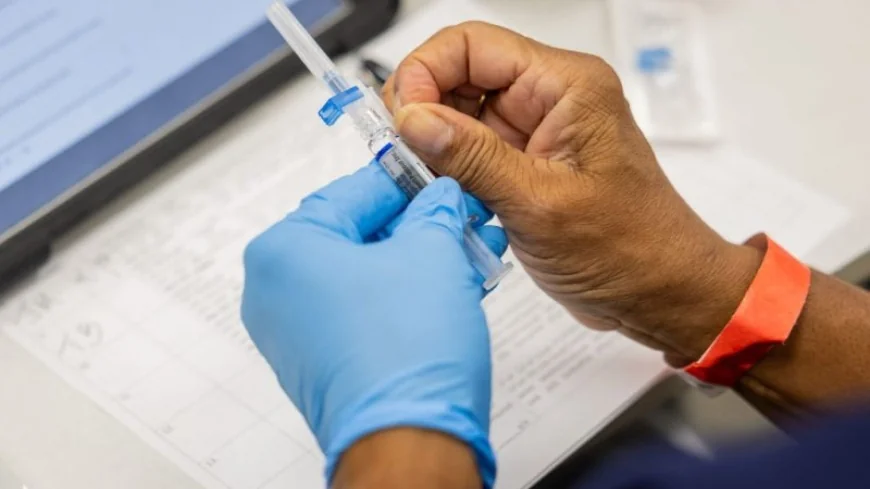
RICHMOND, Va. (WRIC) -- With National Flu Vaccination Week underway, Virginia health experts are urging residents to get ahead of what could become a busy and unpredictable respiratory virus season.
As of reporting, flu, RSV and COVID-19 cases remain low across Virginia — but doctors at Virginia Commonwealth University (VCU) Health say that quiet stretch won’t last. As temperatures drop and holiday gatherings ramp up, respiratory viruses typically spike quickly and sharply.
“We anticipate a rise in all of these infections… common respiratory viral infections including COVID-19,” said Dr. Gonzalo Bearman, chair of infectious diseases at VCU Health. “The levels or the amount of cases being hospitalized right now is very low, which is a good thing, but we anticipate that rising like it does every year as the weather gets colder and people have more indoor gatherings.”
A concerning trend: low vaccination rates across all three viruses
Health officials say vaccination remains the most effective way to prevent severe illness — but current vaccination rates for flu, COVID-19 and RSV remain significantly lower than public health leaders hoped for heading into winter.
“The uptake on vaccines — both for COVID-19 and also for flu and for RSV — is low. It could be better,” Dr. Bearman said. “So the greater the population is unvaccinated, the greater the frequency of infections and potential hospitalizations.”
He added that vaccines may not always prevent infection, but they reliably reduce the severity of illness, keeping many people out of the emergency room.
“A vaccine for flu or COVID may not 100% prevent you getting infected, but it will significantly decrease the risk of having a severe infection and getting hospitalized,” Bearman explained. “The benefits far outweigh the risks.”
Pediatric specialists preparing for RSV and flu increases
At the Children’s Hospital of Richmond at VCU, pediatricians say they’re seeing an early rise in RSV — though not yet at seasonal peak levels.
“We’re probably starting to get into the RSV season. I don’t think we’ve hit flu season yet,” said Dr. Sean McKenna, an Associate Professor of General Pediatrics. “Right now, only about 2 to 3% of our samples are coming back positive for RSV, and closer to 1% for COVID and flu.”
Most cases they’re seeing this week are still “common cold” rhinovirus — but McKenna expects that to change as winter builds.
“Classically, we used to say December, January for RSV and then January, February for flu. We’ll see if that holds true this year," McKenna said.
He said this year’s flu vaccine appears to be a strong match to circulating strains, and that parents should take advantage of the newer RSV protection options available for infants.
“We have RSV protection for little ones, almost everybody qualifies,” McKenna said. “Go ahead and grab that because that’s terrific protection. RSV is rough on those little ones.”
Why doctors are urging vaccination now
Both Bearman and McKenna stressed that early December — before flu and RSV hit peak levels — is the ideal time to get vaccinated.
“It takes weeks, sometimes months, to get maximal response from the vaccine. So the time to get vaccinated is now,” Bearman emphasized.
McKenna agreed, adding that vaccination helps protect not just individuals, but also vulnerable family members during holiday gatherings.
“It’s the time when we spend more time with family because it’s the holidays coming up,” McKenna said. “Not only do you get yourself protected when you get the vaccine, you protect the people that you’re around and the people you care about.”
What symptoms should parents watch for?
McKenna says most early symptoms of viral infections in children begin the same way:
- Runny nose
- Low energy
- Cough
- Fever (especially with flu)
But he warns flu can hit much harder than routine winter viruses.
“Influenza is one of the infections that hits everyone the hardest — and definitely children the hardest,” he said. “You feel terrible for the better part of a week… headaches, vomiting, aches and pains, and just complete fatigue.”
For RSV, he says the first infection is often the worst — with congestion, cough and sometimes labored breathing.
Parents should call a pediatrician if symptoms get worse, if breathing becomes difficult or if your child appears unusually fatigued or dehydrated.
Prevention steps still matter
Doctors emphasized that small, everyday precautions can slow spread:
- Frequent handwashing
- Keeping sick kids home from school
- Masking in crowded indoor spaces if you’re high-risk
- Testing for flu or COVID if symptoms develop
- Staying up to date on available vaccines
Bearman added that for flu and COVID specifically, early testing matters because antiviral medications can reduce severity if started quickly.
“Even if you’ve been vaccinated and have symptoms, it’s important to get tested so we can take the appropriate measures to decrease risk of a severe infection,” he said.
What kind of season should Virginians expect?
Looking at the Southern Hemisphere — often an early predictor — both doctors expect a moderate season, but one that should not be ignored.
“It won’t be the most severe,” Bearman said, “but it certainly will not be one that we should completely overlook.”
McKenna added that flu seasons have become less predictable since the pandemic, making vaccination even more important.
“We don’t know what the next COVID version is going to be,” he said. “Try to stay safe.”
Bottom line
Health experts say Virginians should not wait for flu and RSV numbers to surge.
Vaccines work best before community spread accelerates — and early December remains the ideal time to get protected.
You can find more information on where to get vaccinated at the Virginia Department of Health’s website.