
Lawmaker says judge got it wrong when he ruled social media law would likely violate First Amendment
 VENN
VENN
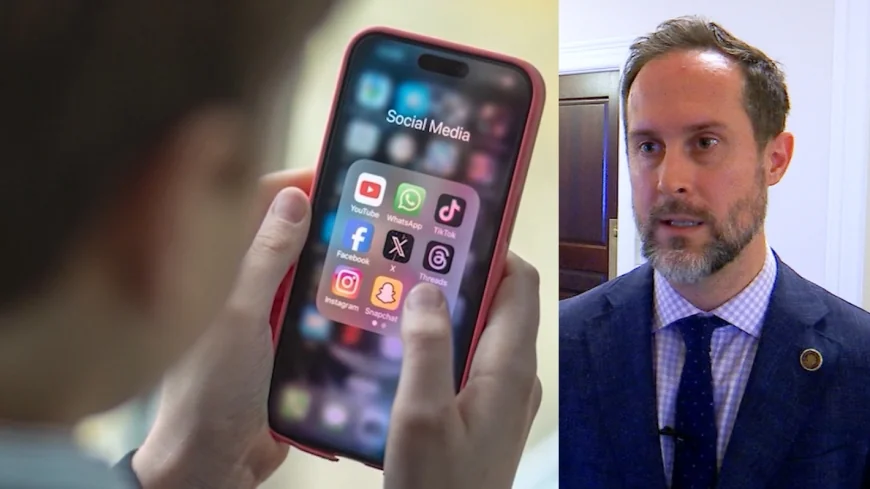
RICHMOND, Va. (WRIC) -- State Sen. Schuyler VanValkenburg (D-Henrico) said he believes a federal judge got it wrong when he ruled a new state law would likely violate the First Amendment.
“The judge misinterpreted the law, misunderstood the law,” VanValkenburg said.
In January, a state law originally written by VanValkenburg and signed into law by former Republican Gov. Glenn Youngkin went into effect, limiting the amount of time minors under 16 can spend on social media. The law caps it at one hour per day per platform unless a parent adjusts that time limit.
However, last week, a federal judge ruled Virginia can’t enforce that law while legal challenges to it play out.
“It’s obviously trying to target speech that the state disfavors,” Paul Taske, co-director of The NetChoice Litigation Center, told 8News. NetChoice, a social media trade association, was the group that originally sued Virginia over the law.
MORE: Judge blocks Virginia law limiting minors’ social media use to one hour daily
The judge in the case said NetChoice will likely convince a judge at trial that the law violates the First Amendment. The judge added she doesn’t believe the law is content-neutral because it creates several exemptions, including for a service or application that consists primarily of news, sports, entertainment or e-commerce.
However, VanValkenburg, who said the law is meant to protect kids from the dangers of social media, disagreed.
“That was about ensuring that the bill was really strictly about social media, because that's the intent. And so a lot of those things he was talking about was really a way of ensuring that we weren't capturing more of the internet in the bill. But it still remains the fact that you can see any content you want on those sites,” VanValkenburg said.
However, NetChoice agreed with the judge that the law isn’t content-neutral and echoed the judge’s interpretation that there are less restrictive ways for the state and parents to protect kids on social media.
“The law puts the government in the driver's seat when there are parental alternatives available,” Taske told 8News. “There are parental tools through the social media services themselves. There are parental tools available at the browser level, on the devices themselves.”
VanValkenburg begged to differ.
“There’s no kinda absolute limits here. It sets a default, and then parents and kids can have a conversation to change that default, and I think that’s not very restrictive at all,” VanValkenburg said in disagreement with the judge.
Attorney General Jay Jones has vowed to appeal the judge’s ruling.