
Spanberger unveils affordability agenda ahead of General Assembly session
 VENN
VENN
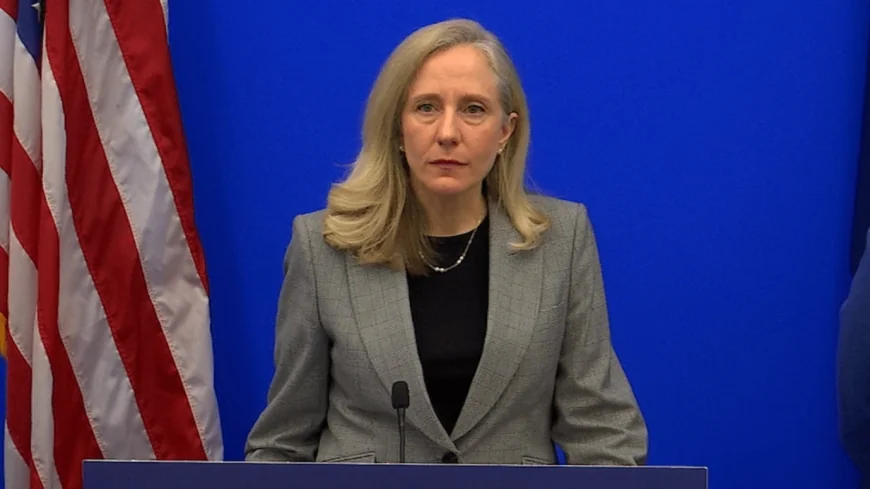
RICHMOND, Va. (WRIC) -- Gov.-elect Abigail Spanberger (D) unveiled her “Affordable Virginia Agenda” on Thursday.
Spanberger joined Democratic General Assembly leaders at the State Capitol on Thursday, Dec. 18, in announcing more than a dozen priorities ahead of the 2026 General Assembly Session.
They include a bill to provide premium assistance to Virginians who could lose their healthcare coverage as a result of the federal government's failure to extend certain Affordable Care Act (ACA) tax credits.
“What we’re proposing here today is a plan that is meant to stabilize the marketplace. It is a targeted program, and in its current formulation, does not pull from the general fund,” Spanberger said.
On housing, Spanberger and General Assembly Democrats are proposing several measures, including a new loan program that would provide lower-interest loans to builders who build mixed-income developments.
“Too many of our neighbors are being priced out, forced out, or shut out of housing,” Spanberger said.
When it comes to energy, Democrats say they want to increase energy storage capacity and expand programs to help low-income Virginians improve their homes’ energy efficiency.
“As the next Governor of Virginia, my overarching, unrelenting focus in 2026 will be making the Commonwealth more affordable for our fellow Virginians," Spanberger said.
In response to Spanberger’s proposals, House Minority Leader Delegate Terry Kilgore (R-Scott) sent 8News the following statement.
“We’re still digesting the governor-elect’s proposals, but at first blush they appear focused on the right priorities. That said, we have serious concerns about how these problems are being addressed. The housing proposals largely focus on managing existing stock rather than increasing the supply of new homes. On energy, we’re concerned about policies that could saddle Virginians with tens of billions of dollars in additional costs for large-scale battery storage, costs that would ultimately be passed on to ratepayers. If you don’t build enough houses, housing gets expensive. If you don’t produce enough energy, energy gets expensive. If demand rises faster than supply, prices go up. No legislation can repeal the law of supply and demand.”