
Blues song featured in ‘Sinners’ was first recorded by Lynchburg singer-songwriter Luke Jordan
 VENN
VENN
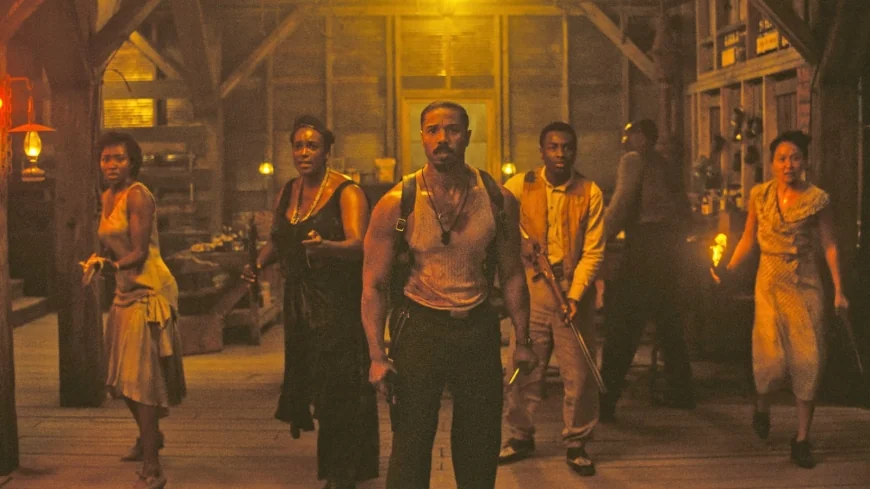
LYNCHBURG, Va. (WRIC) -- A blues song prominently featured in the recent Oscar-winning film "Sinners" is believed to have been first recorded by Lynchburg singer-songwriter Luke Jordan.
"Sinners" is a 2025 film directed by Ryan Coogler that blends horror, blues music and historical themes, featuring Michael B. Jordan and Hailee Steinfeld. The film has won 326 awards and garnered 488 nominations.
Music plays a large role in the film, and at one point features a performance of the song "Pick Poor Robin Clean," one of the earliest recorded blues songs.
The song is performed by central antagonist Remmick, played by Jack O'Connell, and his choir of vampires, as they try to win their way into the juke joint run by twins Smoke and Stack (both played by Jordan), in an attempt to grow their undead army.
Although it is a blues song, the film's version of "Pick Poor Robin Clean" is played closer to folk rhythms, differing heavily from the main type of music played and celebrated throughout 'Sinners' -- Mississippi Delta blues.
8News Reel Talk: ‘Sinners’ movie review
The song appears to symbolize not only the desperation and exclusion of Remmick from the central protagonists -- as he tries and fails to appeal to their musical sensibilities -- while the lyrics describe what the villains will do if they get inside:
"I picked poor Robin clean, picked poor Robin clean
I picked his head, picked his feet
I woulda picked his body, but it wasn't fit to eat."
The first known recording of the "Pick Poor Robin Clean" was a rendition by Luke Jordan, an African American singer-songwriter with Lynchburg roots who is widely considered to have been a blues pioneer in Lynchburg from the 1920s until World War II.
According to a blog post by the Lynchburg Museum, Jordan was born in 1892, though there is very little information on the early years of his life. He was reportedly drafted into the U.S. Army after the U.S. entered World War I.
By the 1920s, after he was released from the military and during possible travels along other parts of the East Coast, Jordan lived for a time in downtown Lynchburg and played music regularly, the museum stated in the post.
Jordan reportedly continued to travel throughout his musical career, and in 1927, in Charlotte, N.C., the museum said he became one of the first country blues players to be recorded.
The Victor Record Company recorded four of Jordan's songs that were then released by the record company on two double-sided records, including "Pick Poor Robin Clean," "Cocaine Blues" and "Church Bells Blues."
Following the success of those releases, the museum said Jordan recorded with the record company again in 1929 and recorded more songs in New York City.
According to the museum, despite Jordan's success, the Piedmont blues style became less popular by World War II. Jordan reportedly lost his voice and stopped singing by the 1940s, which is thought to have been caused by his alcoholism.
He died in 1952, the museum said, and his grave can be found in the Forest Hill Burial Park at 2310 Lakeside Drive in Lynchburg.
In 2021, the Virginia Department of Historic Resources (DHR) created a historical marker honoring Jordan's legacy, which can be found in Lynchburg on Jefferson Street at its intersection with Horseford Road.
The department noted on the historical marker that Jordan has remained an important and "widely imitated" Virginia blues musician despite the manner in which his career ended.
The marker details that Jordan contributed to the fusion of blues with existing ballads, ragtime and tent-show songs alongside other African American musicians in the Southeast, which created a style now recognized as Piedmont or East Coast Blues.