
Retired Virginia fire chief turns cancer battle into mission to protect fellow firefighters
 VENN
VENN
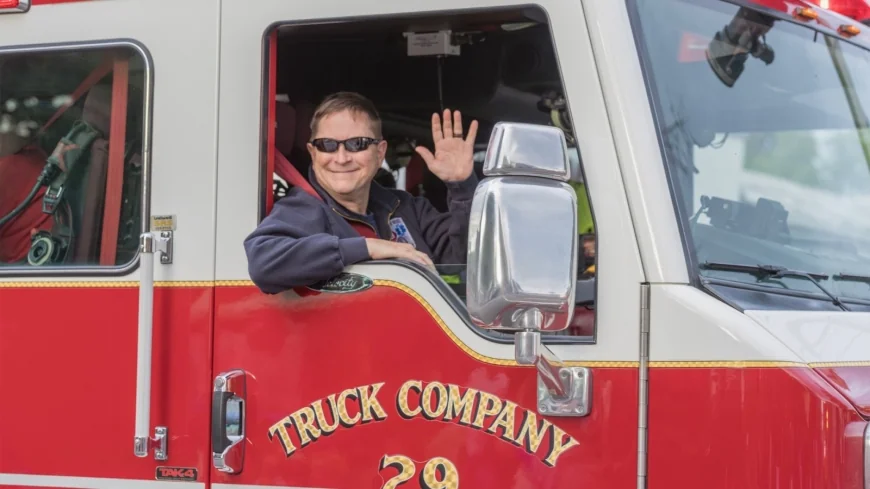
CHESTERFIELD COUNTY, Va. (WRIC) — Firefighting has long been known as a dangerous profession. But today, flames aren’t the leading threat — occupational cancer is.
For retired Spotsylvania County Division Fire Chief Greg Leitz, that reality became personal in January 2024.
“I wondered about this all the time,” Leitz said. “When was that call that gave me the cancer?”

(Photo: Greg Leitz)

(Photo: Greg Leitz)
Leitz was diagnosed with Stage 4 Gleason 9 prostate cancer, which had already spread beyond its original site.
“It had started in the prostate, and it had moved into one of my thoracic vertebrae and had also moved into my pelvis,” he explained.
The physical symptoms were painful and disruptive.
“There were some nights I was getting up every 15 minutes to go to the bathroom and was unable. My bladder just wouldn't empty," Leitz said.
For someone who had spent decades responding to emergencies, the loss of control was both physically and emotionally overwhelming.
“I had to put up a facade that, ‘Hey, I'm a firefighter. I'm a paramedic. I've been doing this for years. Nothing gets to me. I'm okay. I'm unbreakable,’” he said. “And then it got to the point where I literally broke.”
During his career with the Spotsylvania County Fire, Rescue and Emergency Management, Leitz was routinely exposed to diesel exhaust, smoke and chemicals embedded in firefighting gear.
“My understanding is that as it heats up, it does something called off-gassing,” he said. “So all of the forever plastics and all the carcinogens that are in the gear now start off-gassing and it's absorbed into your system.”

(Photo: Greg Leitz)

(Photo: Greg Leitz)
For years, soot-covered helmets — known in the fire service as being “salty" — were worn as a badge of honor. But that culture has shifted as research increasingly links occupational exposure to increased cancer risk. Now, cleaning procedures have changed significantly.
“We get back off the call, our gear is going into the washer, and we have a second set of turnout gear to wear until our other has been laundered, which wasn't the case when I started,” Leitz said.
With his family by his side, Leitz underwent aggressive radiation treatment at VCU Health shortly after his diagnosis.

(Photo: Greg Leitz)

(Photo: Greg Leitz)
Under Virginia’s presumptive exposure law, firefighters who have served at least five years don’t have to prove which specific fire caused their cancer. The law presumes the illness is job-related, making them eligible for workers’ compensation benefits.
But even with that law in place, Leitz said the process was not immediate.
It took months before his workers’ compensation benefits were finalized, adding financial uncertainty to an already overwhelming diagnosis. During that time, medical bills continued while Leitz and his family waited for approval.

(Photo: Greg Leitz)

(Photo: Greg Leitz)
Eventually, the benefits came through. It's something Leitz said made a significant difference for his family as treatment continued.
Today, Leitz is in remission. His message is simple: get screened.

Friends gathered around for a picture at Greg Leitz's last radiation treatment at VCU Health. (Photo: Greg Leitz)
“Whether you're a 21-year-old brand new firefighter or you're a 60-year-old volunteer firefighter, it is so important to catch this stuff," he said.
For Leitz, resilience isn’t just something you show on the fireground. It’s something you live.