
What’s driving holiday prices? Richmond economist weighs in
 VENN
VENN
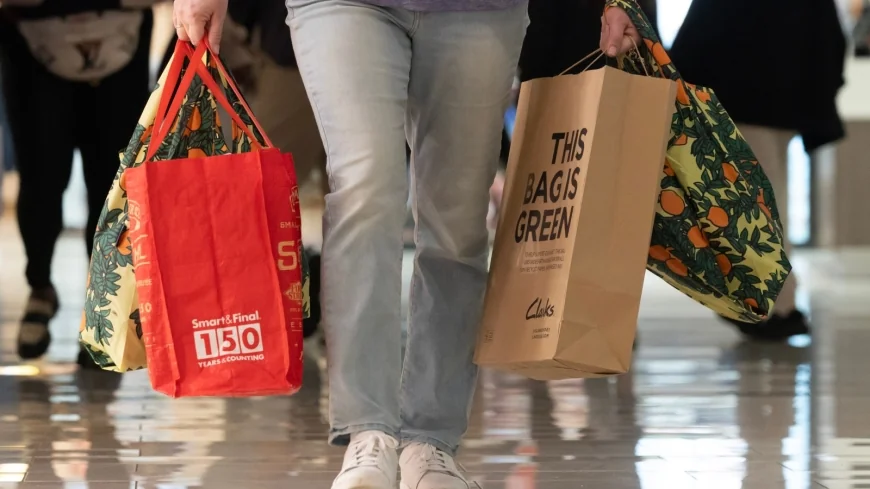
RICHMOND, Va. (WRIC) — The holiday season is in full swing -- and as shoppers rush to finish last-minute purchases, many are paying extra attention to the prices at the register. Economists say a combination of tariffs, inflation, interest rates and supply chain pressures are contributing to increased costs on popular holiday items and everyday goods.
Last week, President Donald Trump announced new tariffs on several U.S. trading partners. Tariffs are just one of the factors pushing prices higher this holiday season, especially for imported goods commonly used for Christmas celebrations, according to Richmond economist Stephen Day.
Day, director of the VCU Center for Economic Education and Author of Teach a Kid to Save, said those tariff rates may be reflected in what shoppers pay at checkout.
"Artificial Christmas trees, which are mostly from China, which has a 30% tariff rate right now, but the lights are usually from Cambodia, which has a 19% tariff rate," he said.
Beyond decorations, Day said some shoppers may also be noticing higher prices on wrapping paper this year.
"You might have to use some of that 'Happy Birthday' wrapping paper for Christmas this year, instead of the nice, festive Christmas wrap," he said. "People will find all sorts of ways to economize, right?"
Tariffs are also affecting electronics and other items often purchased as holiday gifts, Day said.
"Electronics, furniture, things that are mass produced, largely in China, Cambodia [and the] Philippines, [and are therefore] imported," he said.
Still, Day emphasized that tariffs are only part of the picture. He said several economic forces are interacting at once to drive prices higher.
"Tariffs have a bit to do with it, Interest rates have a lot to do with it," he said. "Supply chains and the whole economy have something to do with it. It's really just a mix of everything."
Another ongoing factor is inflation, which Day said remains around 3% and continues to impact the cost of everyday items throughout the year -- not just during the holidays.
For shoppers looking to stretch their budgets, Day suggested thinking beyond gifts alone and planning ahead when sales appear.
"If you want to economize, think about things that you're going to need for next year," he said. "You're definitely going to use and buy those for the Christmas sales."