Virginia lawmakers revive climate education bill as weather grows more extreme
 VENN
VENN
RICHMOND, Va. (WRIC) -- As Virginia lawmakers revive a climate education bill that failed under the previous administration, recent severe and unpredictable weather is making the case for the bill in real time.
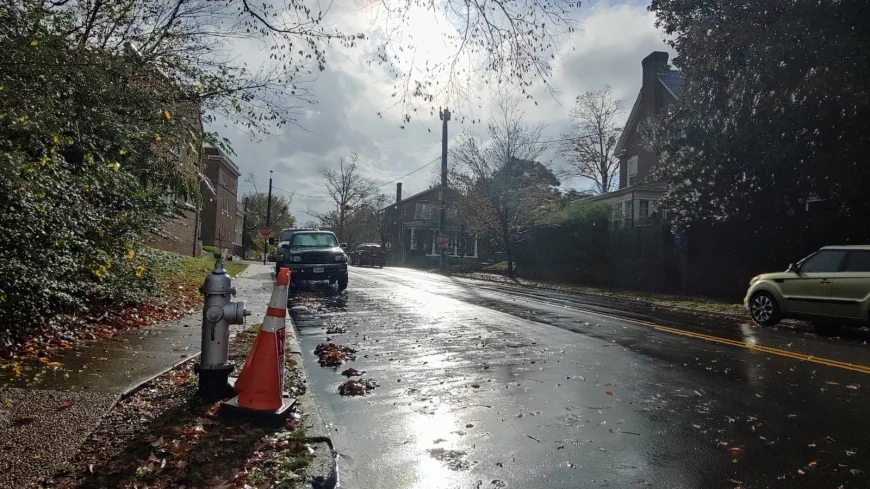
Following the late January snow, sleet and freezing rain storm -- along with multiple bouts of far less extreme winter weather -- dangerous frigid temperatures persisted across the Commonwealth. That left many asking: Isn't climate change supposed to mean global warming?
While climate change is often associated with global warming, experts said its impacts are not uniform. Those questions shape Virginia policy as lawmakers debate how climate change is taught in schools.
"I think that's one thing people think [about] global warming and that the planet is going to warm up and everywhere is going to get hotter," Vickie Connors, an expert at Virginia Commonwealth University (VCU), told 8News.
MORE: ‘This is not natural’: VCU expert links climate change to intensifying Virginia winter storms
What is House Bill 1037?
Betsy Carr (D-District 78) reintroduced House Bill 1037 on Wednesday, Jan. 14 -- a bill identical to failed House Bill 1088 from 2024, which passed the General Assembly in 2024 and was vetoed by Gov. Glenn Youngkin (R).
House Bill 1037 would require the Virginia Board of Education to help local school boards with instructional materials on climate change and environmental literacy.
"Climate change and protection of our environment are among the most critical issues facing us," Carr wrote in a statement to 8News. "Our children will have to address these crises if our earth is to survive. Our schools create the leaders of tomorrow and those leaders need to be prepared with accurate information on both climate change and conserving our environment. This bill is one small step to ensuring that happens and protecting our future."
The bill is part of a wider initiative to establish consistent standards for teaching climate science in Virginia's schools.
As snow melts, Virginia lawmakers seek alternatives and awareness to road salt
For some students, climate change has already shaped how they view the world.
Nethra Purushothaman, an 11th grader at Thomas Jefferson High School for Science and Technology, has been advocating for the inclusion of climate education in the curriculum for the past three years.
"In seventh grade, I was lucky enough to have a teacher who deeply cared about climate change, and made the time to teach it in lesson[s]," Purushothaman said during Tuesday's meeting. "This lesson was one of the things that inspired me to care about climate change. Many of the students right now already know about basic actions like recycling and turning off lights, so it's time that they learn about [the] intersections of environmental and social issues."
This comes amid statewide efforts to revisit climate-related policies. Virginia's House of Delegates passed House Bill 397 on Tuesday, Feb. 3, bringing the state one step closer to rejoining the Regional Greenhouse Gas Initiative (RGGI) -- also reversing policies enacted under the previous Republican administration.
MORE: Virginia House passes bill to rejoin controversial climate change agreement
Climate change already being felt across the Commonwealth
As lawmakers debate how climate change is taught in Virginia schools, the impacts of climate change are already being felt across Central Virginia.
Laura Thomas, the city's Director of the Office of Sustainability, who leads the RVAgreen 2050 initiative, said climate change simply means a changing climate.
Richmond has experienced increased flooding, heat, rising energy bills and a massive strain on emergency response preparedness, particularly during the recent winter storms.
Thomas said that, down the line, residents will see potential droughts and hotter summers with severe flooding, which could include rainfall or tidal flooding.
Over the last two summers, there have been days when Richmonders woke up, and the entire city has a thick haze due to wildfires hundreds and thousands of miles away, she said.
"We do know that these things are going to increase over time, and that we'll start to see these patterns and trends emerge, and that, unfortunately, we're already seeing those things today," Thomas told 8News.
Richmond area businesses feel split impact of lingering winter weather
Teaching climate literacy
Since climate change risks are becoming more visible across Virginia, experts said misconceptions about climate science -- especially during severe weather -- are shaping how students understand what they are experiencing in real time.
This was evident during Tuesday's public comment meeting regarding HB 1037. Some expressed their opposition to the bill, including Sheila Fury, who called it "dishonest."
Henrico seeks community input for climate action, adaption strategy
"Everyone wants the environment to be safe," Fury said during the meeting. "However, we're not looking at the many factors that are infiltrating -- that the government is specifically doing that is affecting our climate."
Fury cited claims of geoengineering and chemical releases -- including boron and aluminum -- which she said are influencing precipitation and other weather patterns.
Peer-reviewed research published in the journal Environmental Research Letters has found no evidence of a secret, large-scale atmospheric spraying program and concluded that such claims are not supported by atmospheric science.
Those who support HB 1037 argue education is one way to begin closing those gaps.
Gov. Spanberger warns of rising carbon monoxide poisoning cases, urges caution
They believe the bill will combat misconceptions by ensuring instructional materials are based on peer-reviewed scientific sources and accurately portray changes in weather and climate patterns over time.
Carr emphasized her concerns, sharing that she hopes to prepare young people to think critically and take an active role in protecting the environment.
The bill will now be reviewed by the Senate Committee. If it passes both chambers for the second time, it would go to Gov. Abigail Spanberger’s (D) desk for a final decision.